
Cabinets Refinished to Match a Full Interior Renovation
Cabinet refinishing in Charleston for kitchens and baths where dated finishes are the most visible remaining problem after walls are repainted
A full interior repaint changes the visual baseline of every room it touches—which means cabinet boxes and door faces finished in a color or sheen that made sense against the old wall color can look conspicuously out of place once new wall paint goes up. M & J Drywall & Construction offers cabinet refinishing for residential and commercial properties in Charleston as part of the interior painting scope, coordinating cabinet work with the full paint job so both finish together. The result is a kitchen or bathroom where cabinet faces, wall color, and trim sheen are resolved as a unified set rather than addressed in separate projects at separate times.
Cabinet refinishing through M & J Drywall & Construction follows the same prep-first discipline applied to walls. Surfaces are cleaned, lightly abraded for mechanical adhesion, primed with a product appropriate to the existing finish, and painted with a coating specified to match the interior aesthetic. Because the work is coordinated with the full paint job, cabinetry is complete when the crew wraps the project—there is no waiting for a second contractor to schedule a return visit for the cabinet phase. High-end homes in Mount Pleasant undertaking larger interior renovations benefit specifically from this coordination, because the kitchen and primary bath cabinets are typically the highest-visibility surfaces in the home and the ones where finish inconsistency is most immediately apparent.
Arrange a walkthrough that includes the kitchen and bath spaces so cabinet condition and current finish can be assessed alongside the wall scope.
The Difference Between Cabinet Painting Done Well and Done Fast
Cabinet refinishing fails noticeably when adhesion prep is skipped or abbreviated. Factory finishes on cabinet boxes—particularly the catalyzed lacquers and conversion varnishes used on cabinetry built in the 1990s and 2000s—are engineered to resist bonding with new coatings, because that chemical resistance is what makes them durable in a kitchen environment. Applying paint directly over those finishes without mechanical abrasion or a bonding primer results in a topcoat that looks fine initially but chips at edges and peels at door corners within months of normal use. Proper prep addresses that adhesion barrier before the topcoat is ever mixed.
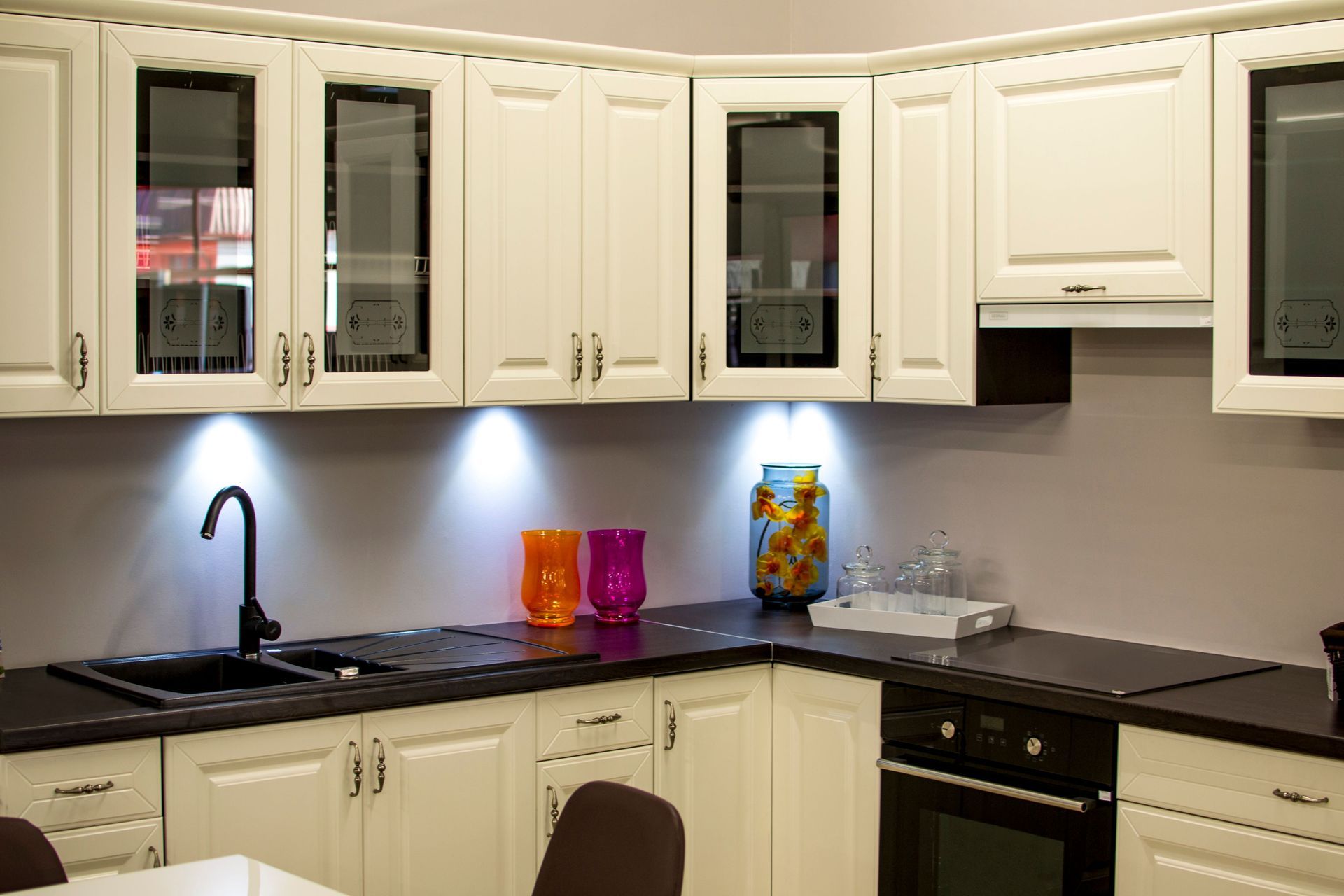
After refinishing is complete, the observable difference in a well-executed cabinet paint job is a finish that looks applied, not sprayed from a can: even coverage across flat panels and into recessed profiles, no brush marks or roller stipple in the topcoat, and edges that are sharp where the cabinet face meets the door reveal. Sheen level holds consistently across all surfaces rather than appearing flat in recessed areas and glossy on raised faces, which is the most common visual indicator of an uneven application. When cabinet work and wall painting are completed by the same four-person crew in the same project window, color transitions between wall color and cabinet color are handled by the people who mixed and applied both—which is how those transitions stay accurate.
Cabinet refinishing is offered as part of interior painting and renovation work, not as a standalone cabinet-only service. This means the service is most appropriate for clients undertaking a broader interior repaint where cabinets are one component of the overall project scope. Hardware removal, hinge masking, and door sequencing are handled as part of the project workflow so cabinet faces are accessible and doors can be painted flat when appropriate.
Questions About How Cabinet Refinishing Work Is Done
These questions address the practical mechanics of cabinet refinishing—how surfaces are prepared, what makes finishes hold, and how the work fits into a larger interior painting project.
Why do factory cabinet finishes require special prep before painting?
Factory finishes are designed for chemical resistance, which means standard primer and paint do not bond to them without mechanical abrasion or a bonding primer that creates a surface the topcoat can key into. Skipping this step is the primary reason painted cabinets chip and peel at edges under normal kitchen use.
How is cabinet refinishing sequenced within a full interior paint project?
Cabinet work is coordinated with the wall painting schedule so both phases complete within the same project window. Typically, cabinet boxes and doors are prepped and primed while wall work is advancing in other rooms, so the topcoat phase for cabinets can run concurrent with trim painting in the same space.
What finish types are appropriate for painted kitchen cabinets, and how do they differ from wall paint finishes?
Kitchen cabinets typically receive a semi-gloss or satin enamel product that is harder and more washable than the eggshell or flat finishes used on walls. The topcoat selection matters because a wall-spec paint on cabinet faces will scuff and mark under the contact and cleaning cycles a kitchen cabinet receives daily.
How does the condition of existing cabinet finish affect how the refinishing scope is sized?
Cabinets with heavy grease buildup, prior paint layers that are chipping, or delaminating veneer on door faces require more prep time than cabinets in sound condition with an intact factory finish. The extent of that prep work is determined during the on-site walkthrough before the project is scoped.
What does a correctly finished cabinet look like when inspected at close range?
Even coverage across flat panels and recessed profiles, consistent sheen without flat spots in corners, sharp edges at door reveals, and no visible application texture in the topcoat are all indicators of a properly executed finish. Inconsistent sheen and visible brush marks in corners are the two most common signs of a prep or application shortcut.
M & J Drywall & Construction also completes cabinet refinishing as part of interior painting projects in Goose Creek, Summerville, Moncks Corner, Beaufort, and Mount Pleasant. To include cabinet refinishing in your interior painting estimate, note the kitchen and bath spaces during your initial walkthrough so surface conditions can be evaluated alongside the wall scope.