
Drywall Hung and Finished to Paint-Ready Standard
Drywall installation in Charleston for new construction and major renovation projects requiring turn-key hanging, finishing, and priming
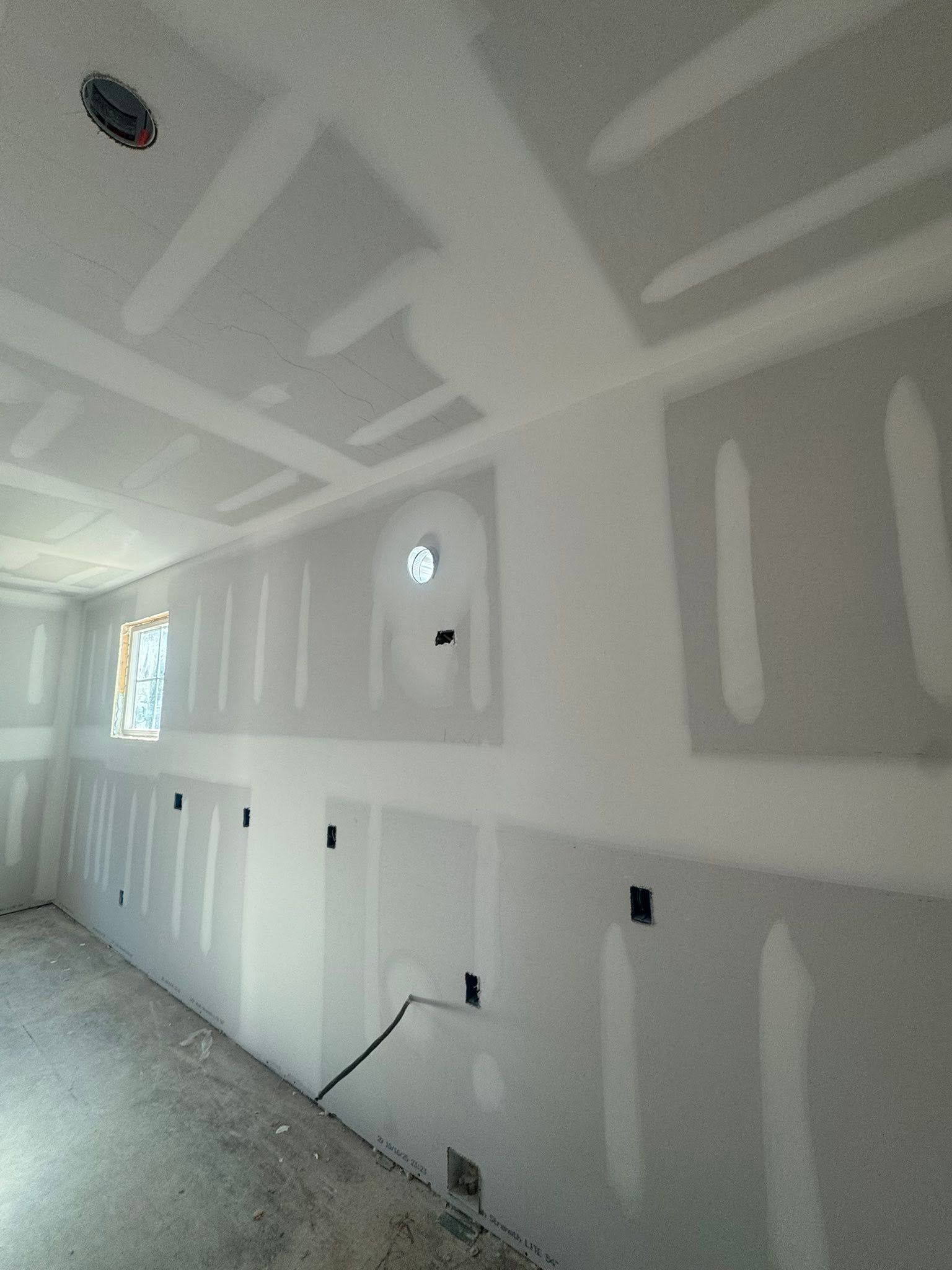
New construction and large-scale renovation in Mount Pleasant increasingly demands that drywall crews deliver finished, primed walls rather than bare hung board—because every additional subcontractor needed to complete that sequence extends the project schedule and adds a coordination point where handoffs stall. M & J Drywall & Construction provides turn-key drywall installation for residential and commercial projects in Charleston: hanging, taping, multi-stage mudding, Level 5 Skim Coat finishing, sanding, drywall point-up, and prime coat are all completed before the crew leaves the site. The result is a space where the next trade—painters, tile setters, or finish carpenters—can begin work without ordering additional prep from a separate contractor.
The installation sequence follows a strict stage discipline: drywall panels are hung and fastened, then joints are taped and receive the first mud coat, followed by additional compound coats applied after each prior coat dries adequately. Rushing between mud coats is one of the most common causes of visible cracking at joints within the first year of occupancy. After the final coat is sanded, a skim coat is applied across the entire wall surface—not just at joints—and sanded smooth before prime. That skim coat step is what separates a Level 5 finish from standard Level 4, and it's the difference between walls that read cleanly under paint and walls that telegraph every joint location in raking light.
To schedule drywall installation around your current construction timeline, provide project scope details and the crew can confirm availability.
What Drywall Installation Actually Accomplishes
Turn-key drywall installation from M & J Drywall & Construction includes material, labor, and cleanup—the crew arrives with what the job needs and leaves with the site in condition for the next phase. Drywall point-up, which is the step where wall surfaces are spot-checked and repaired for any fastener dimples, corner damage, or surface inconsistencies before primer is applied, is included in the standard scope rather than listed as an optional add-on. This step is often where budget installations cut corners, because it adds time without adding visible material—but its absence shows the moment paint goes on the wall.
When the installation is complete, you'll receive walls and ceilings that accept primer evenly across the full surface, with no visible joint lines, no fastener shadows, and no seam ridges that shift under different lighting conditions throughout the day. The prime coat is applied over the skim-coated surface, not over raw compound, so the wall is sealed against moisture absorption before the finish painter arrives.
Four-person crews with six years of established builder relationships in the Charleston area handle the full installation scope within project schedules rather than as a disconnected subcontract—which is the arrangement that allows coordination with the general contractor's timeline rather than competing with it.
Questions Before Starting Your Project
These questions address how drywall installation is performed from hanging through prime coat, including what decisions get made during the process and why they matter.
What is included in a turn-key drywall installation and what is handled separately?
Hanging, taping, multi-stage mudding, skim coat finishing, sanding, drywall point-up, and prime coat are all included; finish painting is a separate scope performed by the painting crew after the prime coat has cured.
Why does drywall finishing require multiple separate mud coats rather than one thick application?
Each coat shrinks slightly as it dries; applying compound in stages allows each layer to cure and stabilize before the next is added, which prevents the cracking at joints that occurs when thick, single-pass coats dry unevenly from the surface inward.
How does Level 5 Skim Coat finishing differ from standard Level 4 in new construction in Charleston?
Level 4 finishes joints and fasteners but leaves the field of the drywall panel with its factory texture; Level 5 applies a continuous thin coat of compound over the entire wall surface and sands it flat, which is the standard required when paint sheens below eggshell are specified or when lighting conditions will expose surface variation.
When in the construction sequence should drywall installation be scheduled?
Drywall goes in after rough framing inspection is passed and mechanical rough-ins—electrical, plumbing, HVAC—are complete and inspected; scheduling before inspections are closed means panels may need to be removed for access, which reverses completed work.
How do crews handle drywall installation in custom homes with vaulted ceilings or complex angles?
Vaulted and angled surfaces require cutting panels to non-standard dimensions and may require additional fastening points along irregular framing; the joint placement on angled transitions is planned before hanging begins to avoid seams at stress points where the ceiling plane changes direction.
M & J Drywall & Construction also installs and finishes drywall in Goose Creek, Summerville, Moncks Corner, Beaufort, and Mount Pleasant. Builders and project managers coordinating new construction schedules can contact the office directly to review scope, timing, and crew availability for upcoming installations.