
Repairs That Disappear Under Paint
Drywall repair and finishing in Charleston for walls requiring Level 5 Skim Coat before paint or new wallpaper is applied
A patched wall that reads as a patch under paint is a failed repair—regardless of how well the hole itself was filled. High-end residential work in the Charleston area, particularly in neighborhoods like Folly Beach and Sullivan's Island where older homes carry years of repair history layered beneath multiple paint coats, requires finishing that eliminates the visual record of every previous fix rather than simply covering it. M & J Drywall & Construction repairs drywall damage and finishes walls to Level 5 Skim Coat standard in Charleston, producing surfaces where repaired areas are indistinguishable from the surrounding wall under direct and raking light.
The approach to a repair depends on the size and cause of the damage. Small holes and dents receive spackling and sanding; larger areas—where drywall paper has lifted, where a previous patch has cracked at its edges, or where a section must be replaced entirely—are patched with new drywall, taped with mesh or paper tape depending on the joint type, and mudded in stages before any skim coat is applied. After repairs are complete, the entire affected wall surface receives a final skim coat—not just the repaired area—so the texture across the wall face reads consistently. Priming is included before the crew clears the site.
Arrange a site visit to assess the scope of wall damage and confirm what the repair sequence will involve before scheduling begins.
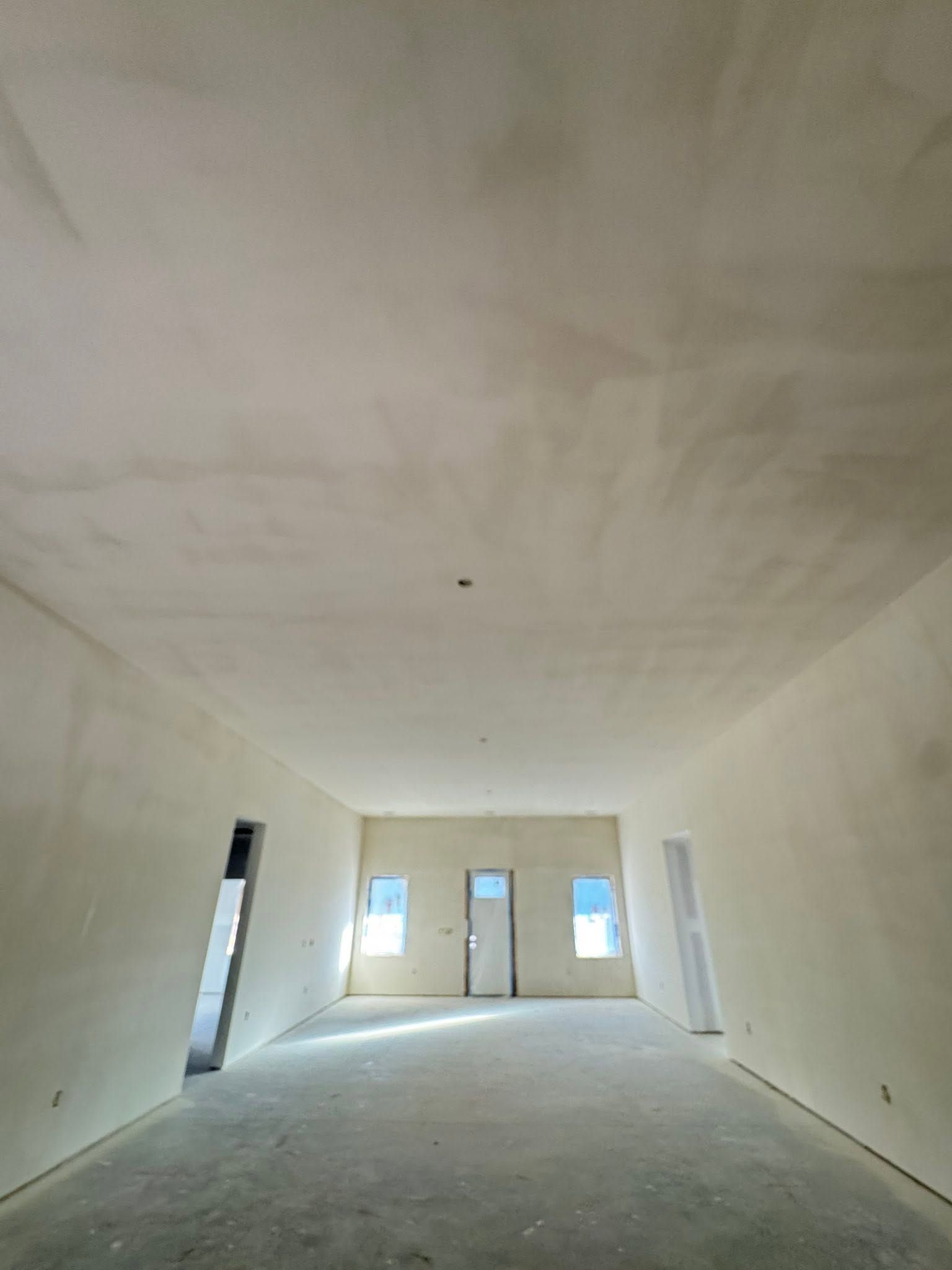
Why Skim Coating the Full Wall Surface Matters
Spot-patching without skim coating the surrounding field is the most common shortcut in drywall repair, and it produces a predictable result: the repaired area reads clearly against the unpatched wall surface because the two areas have different textures, different porosity, and different levels of compound build-up. M & J Drywall & Construction applies the Level 5 skim coat to the full wall surface after repairs are complete—a thin layer of joint compound spread and sanded flat across the entire face—which levels those differences and gives the painter a consistent substrate that accepts primer and paint uniformly across the wall.
After repair and finishing work is complete, you'll notice walls where previous damage locations are not identifiable by touch or by eye, where paint applies without pulling at repaired edges or raising texture differences in raking light, and where the wall reads as a single continuous surface rather than a collection of patches at different finishing stages. That outcome is confirmed in recent customer reviews describing the finishing standard as exceptional, which reflects the skim coat step being completed consistently rather than selectively.
The repair scope also includes drywall point-up—preparation of the wall surface for paint adhesion—so no additional prep is required from a painter before primer goes on. Work is coordinated with the broader painting or renovation timeline when other interior work is happening concurrently, so repair completion aligns with the paint crew's schedule rather than creating a wait between finishing and painting phases.
What Property Owners Ask About the Work
These questions address how drywall repair and Level 5 finishing are performed and what distinguishes work done to a finished standard from a basic patch.
How does the crew determine whether a damaged area needs a patch or full panel replacement?
The depth and extent of damage determines the method—shallow surface damage is filled with compound, but areas where the drywall core is compromised, where paper has lifted extensively, or where previous patches have separated at their edges require new drywall and tape rather than additional compound over an unstable base.
What is the correct sequence for patching and skim coating a repaired wall?
Repairs are completed and allowed to cure fully before skim coat is applied; applying skim coat over wet or partially cured compound causes the skim layer to crack as the underlying material continues to dry and shrink.
How does Level 5 Skim Coat finishing address walls in older Charleston homes that have accumulated multiple repair layers?
Older walls often have raised edges at previous patch locations and inconsistent compound build-up from decades of spot repairs; the skim coat levels those variations by establishing a fresh, consistent surface layer over the entire wall rather than trying to blend individual repairs into a mismatched field.
Why do repaired areas sometimes show through paint even after they look smooth before painting?
Raw compound absorbs primer differently than the surrounding painted or primed wall surface; without a skim coat that is primed as a single surface, the repaired area drinks primer at a higher rate and reads as a dull spot or slight texture difference in the dried finish coat.
What does the finished wall feel like and look like when repair and skim coat work is done correctly?
A properly skim-coated wall feels smooth across the entire surface without ridges at patch edges or texture variation between repaired and unrepaired areas; under raking light, it reflects evenly without shadows or raised lines at any joint or previous damage location.
M & J Drywall & Construction also completes
drywall repair and Level 5 finishing in Goose Creek, Summerville, Moncks Corner, Beaufort, and Mount Pleasant. For walls that need repair before a paint project can move forward, schedule a site assessment to identify what the surface requires and how the repair sequence fits the overall timeline.