
Walls Finished to a Standard Worth Noticing
Interior painting in Charleston for homes where surface prep determines how long the finish holds
M & J Drywall & Construction handles full interior painting for residential and commercial properties in Charleston, bringing a four-person crew that moves through a complete home in four to five days with all trim included. Before any primer touches the wall, every surface runs through drywall point-up and is finished to Level 5 Skim Coat standard—a step most painting crews skip entirely because it adds labor, but one that determines whether paint sits flat or telegraphs every imperfection underneath. That standard shows up clearly in the final result: walls that hold a clean, even coat rather than revealing roller texture, tool marks, or patch outlines under raking light.
The crew starts each project by removing outlet faceplates, centering furniture in each room, and covering all floors and windows before any work begins. Drywall point-up runs on all walls before primer is applied, catching nail pops, settlement cracks, and joint seams that would telegraph through finished paint. Trim paint is included as part of the full scope, not an add-on, so baseboards, casings, and door frames receive the same prep and finish as the walls. Using a single four-person crew rather than rotating workers across jobs means the same people who start the project finish it, which keeps color lines, sheen transitions, and edge work consistent room to room.
Set up a walkthrough at your property so the crew can assess wall conditions and scope the work accurately before scheduling begins.
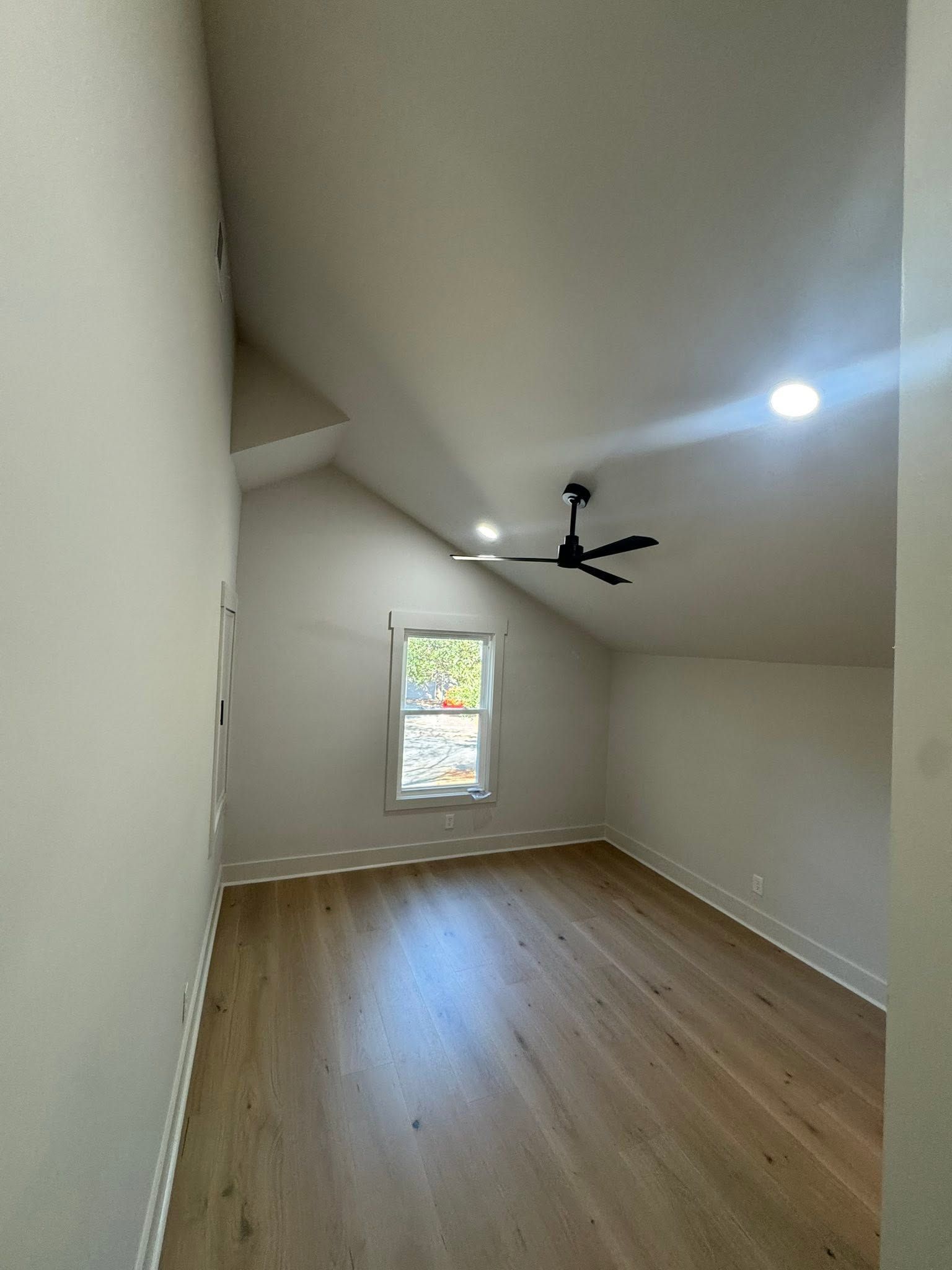
What Level 5 Prep Actually Changes About the Final Coat
Level 5 Skim Coat finishing involves applying a thin coat of joint compound across the entire wall face—not just at seams and fastener dimples—then sanding it flat before primer. The result is a surface with no texture variation, which matters most in rooms with side-lit windows or high-gloss and satin finishes where any surface irregularity becomes visible. Custom homes in Mount Pleasant, particularly those built since the early 2000s with open floor plans and large window packages, tend to have wide wall expanses where finish inconsistencies become obvious at certain times of day.
Once M & J Drywall & Construction finishes a room to that standard, the difference is measurable: paint lays without shadowing, seams do not read through the topcoat, and the wall reads as a single plane rather than a patchwork of repaired areas and original drywall. Trim lines are crisp where wall color meets casing paint, and sheen levels stay consistent because the substrate beneath them is uniform. These are details that distinguish a paint job done to a builder spec from one done to a renovation spec.
The four-person crew model also affects how much disruption the project creates inside the home. Because the full job completes in four to five days rather than being stretched over two or three weeks, furniture stays stacked in room centers for a shorter window, and the house is usable again sooner. The scope includes trim throughout, so there is no follow-up visit needed to complete casings or baseboards after the fact.
What Property Owners Ask About Interior Painting Work
These questions focus on how interior painting is scoped and executed, particularly for homes where surface condition and finish quality are the primary concerns.
What does Level 5 Skim Coat finishing involve, and why does it matter before painting?
Level 5 involves skim-coating the entire wall surface with joint compound and sanding it flat—not just patching seams—so the substrate is completely uniform before primer is applied. On walls with satin or semi-gloss finishes, or in rooms with strong side lighting, skipping this step means surface irregularities show through the topcoat.
What prep work happens before paint is applied on a full interior job?
The crew removes outlet faceplates, moves furniture to the center of each room, and covers all floors and windows before touching walls. Drywall point-up follows on every surface, addressing nail pops, cracks, and seams before primer.
How does using a single four-person crew affect the consistency of the finished work?
One crew starting and finishing the same project means color transitions, sheen levels, and trim lines are handled by the same people throughout. Rotating workers mid-project is one of the most common sources of inconsistency in large interior paint jobs.
What is included in the trim painting scope, and does it require a separate visit?
Trim paint—baseboards, door casings, and window frames—is part of the full interior painting service, not a separate line item. It is completed by the same crew during the same four-to-five-day project window.
How do older Charleston homes affect the prep scope on an interior painting project?
Properties in Charleston's historic districts and in older neighborhoods often have multiple layers of existing paint, plaster walls rather than drywall, and trim profiles that require hand-cutting rather than tape and roll. These conditions typically expand the drywall point-up phase and affect how primer is selected for adhesion over aged surfaces.
M & J Drywall & Construction also completes interior painting in Goose Creek, Summerville, Moncks Corner, Beaufort, and Mount Pleasant. To get a specific picture of what prep your walls need and how the project would be sequenced, request an on-site estimate based on current surface conditions.