
Debris Cleared as the Renovation Moves Forward
Junk removal in Charleston for interior remodeling projects where construction scrap needs to leave before finishing work begins
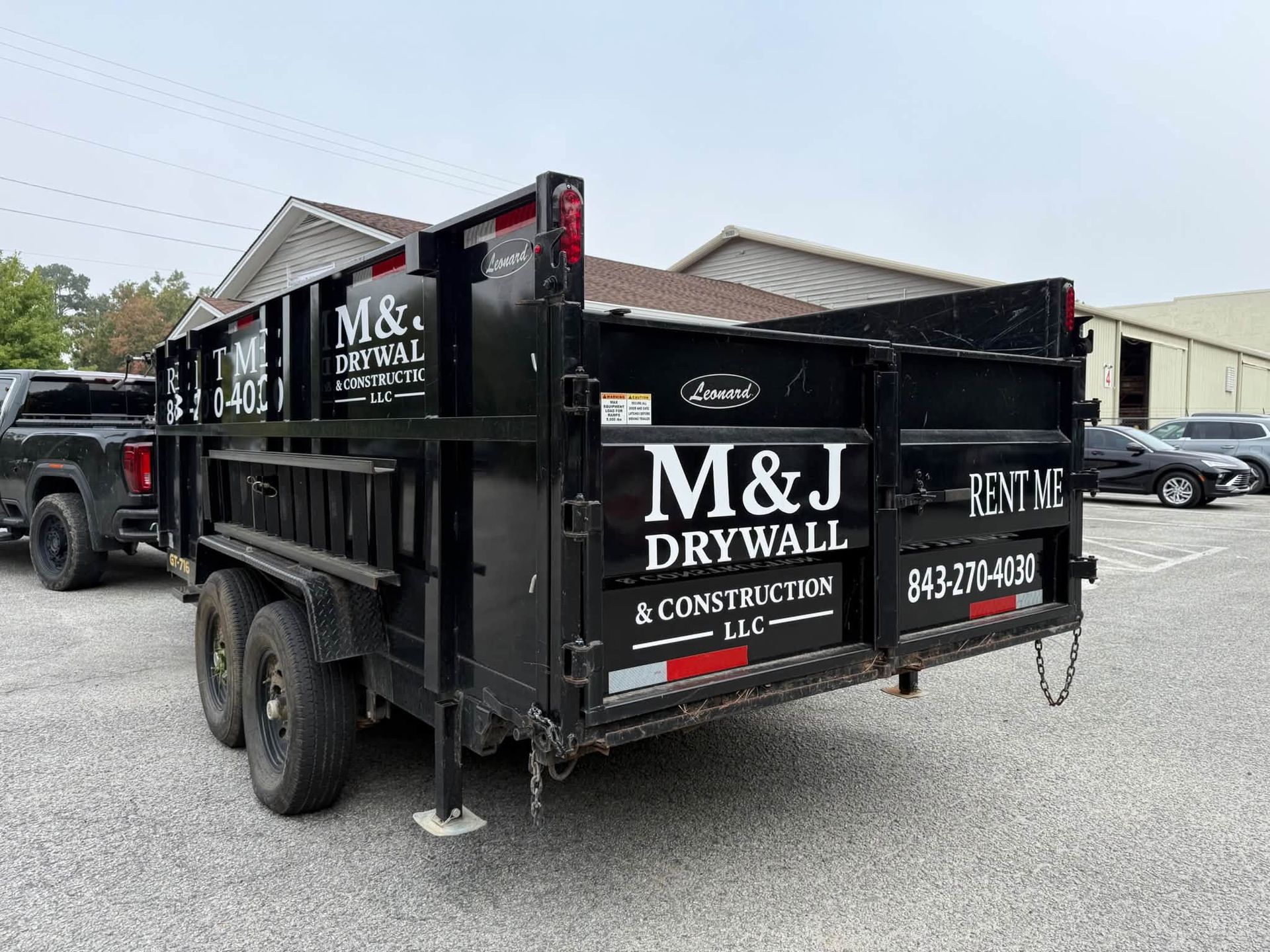
Construction debris that piles up mid-renovation does not just create clutter—it occupies the floor space and staging areas that finishing crews need to work efficiently, and leaving it in place forces every subsequent trade to work around it. M & J Drywall & Construction offers junk removal for interior remodeling scrap as part of turn-key drywall and painting renovation work in Charleston, hauling material as the project advances rather than letting it accumulate. The service is scoped specifically for interior remodeling debris and smaller residential jobs, not large-scale demolition or commercial cleanouts.
Older custom homes in Charleston and on Sullivan's Island generate substantial drywall and trim debris during renovation—tearouts from wall repairs, cut-off drywall sheets, scrap lumber from framing adjustments, and packaging from new materials. When that material stays on-site through the finishing phase, it interferes with the ability to lay drop cloths flat for paint, creates trip hazards for crews working at trim height, and obscures the floor area that needs to be protected before any coating work begins. Hauling it as the project progresses keeps each work area clear and ready for the next phase.
Connect with M & J Drywall & Construction to confirm whether your specific renovation scope falls within the junk removal service before scheduling begins.
Why Debris Timing Matters in Renovation Sequencing
In a renovation where drywall installation, repair, finishing, and painting are all part of the same project scope, debris from one phase sitting on the floor through the next phase creates compounding problems. Drywall scrap left from the installation phase means the finishing crew works around piles of material rather than staging tools and compound buckets at the wall face. By the time paint prep begins, that same debris is coated in joint compound dust, harder to move, and more likely to damage freshly finished surfaces if shifted carelessly. Removing it in stages—as each phase completes—keeps the project moving cleanly through to the finish coat.
Once debris has been cleared from each room as work moves through it, the practical difference shows up immediately in how the finishing and painting phases can be set up. Drop cloths lay flat against the floor without bridging over debris piles, outlet faceplates can be removed without working around obstructions, and the crew can stage paint materials and tools at the wall without competing for floor space. Rooms that are cleared through the project are also easier to inspect for punch-list items because nothing is obscuring the baseboard trim or lower wall sections.
The junk removal service through M & J Drywall & Construction is limited in scope intentionally—it covers interior remodeling scrap and smaller residential loads generated during drywall and painting work, not large demolition loads, appliance removal, or estate cleanout volumes. This keeps the service functional as a project support function rather than a standalone haul service, and it means the removal happens in coordination with the renovation timeline rather than as a separate scheduling event.
Common Questions About Construction Debris Removal
These questions address how debris removal fits into a renovation project scope, what types of material are included, and how sequencing affects the work.
What types of material does interior remodeling debris removal typically cover?
Interior remodeling scrap includes cut drywall sheets, joint compound packaging, scrap lumber from framing adjustments, old trim pulled during renovation, and dust and fragment residue from sanding and finishing work. Material generated during drywall installation, repair, and painting prep falls within this category.
Why does removing debris during the project rather than at the end affect how finishing work proceeds?
Joint compound work and paint prep both require clear floor space for staging and drop cloth placement. Debris that remains through multiple phases collects dust, compound splatter, and paint overspray, making it heavier and messier to handle by the time the project concludes—and more likely to damage finished surfaces if moved after coatings are applied.
How does the debris volume from a renovation in an older Charleston home compare to a newer build?
Homes in Charleston's older neighborhoods and on properties like Sullivan's Island frequently have multiple layers of drywall, plaster over lath in some cases, and trim profiles that require full removal rather than simple patching. That construction history means tearout generates more material per square foot than a renovation in a newer single-layer drywall build.
What happens to the debris once it is removed from the interior?
Material is hauled off-site as the project advances, keeping each room staged and ready for the next phase. The hauling is coordinated with the renovation workflow rather than treated as a separate job event at project end.
How does cleared floor space affect the quality of paint prep and finishing work?
Drop cloths need to lie flat to protect floors and create a clean boundary between floor surfaces and wall bases. When floor space is obstructed, coverings bunch and shift, which increases the risk of paint drips reaching unprotected areas and makes it harder to maintain clean lines at baseboards and floor transitions.
M & J Drywall & Construction also provides
junk removal as part of renovation work in Goose Creek, Summerville, Moncks Corner, Beaufort, and Mount Pleasant. To confirm that your project's debris volume and material type fall within the service scope, discuss the specifics with the crew when arranging your renovation estimate.