
Ceilings That Look Built That Way
Popcorn ceiling removal in Charleston for homes with water-stained or dated texture finishes
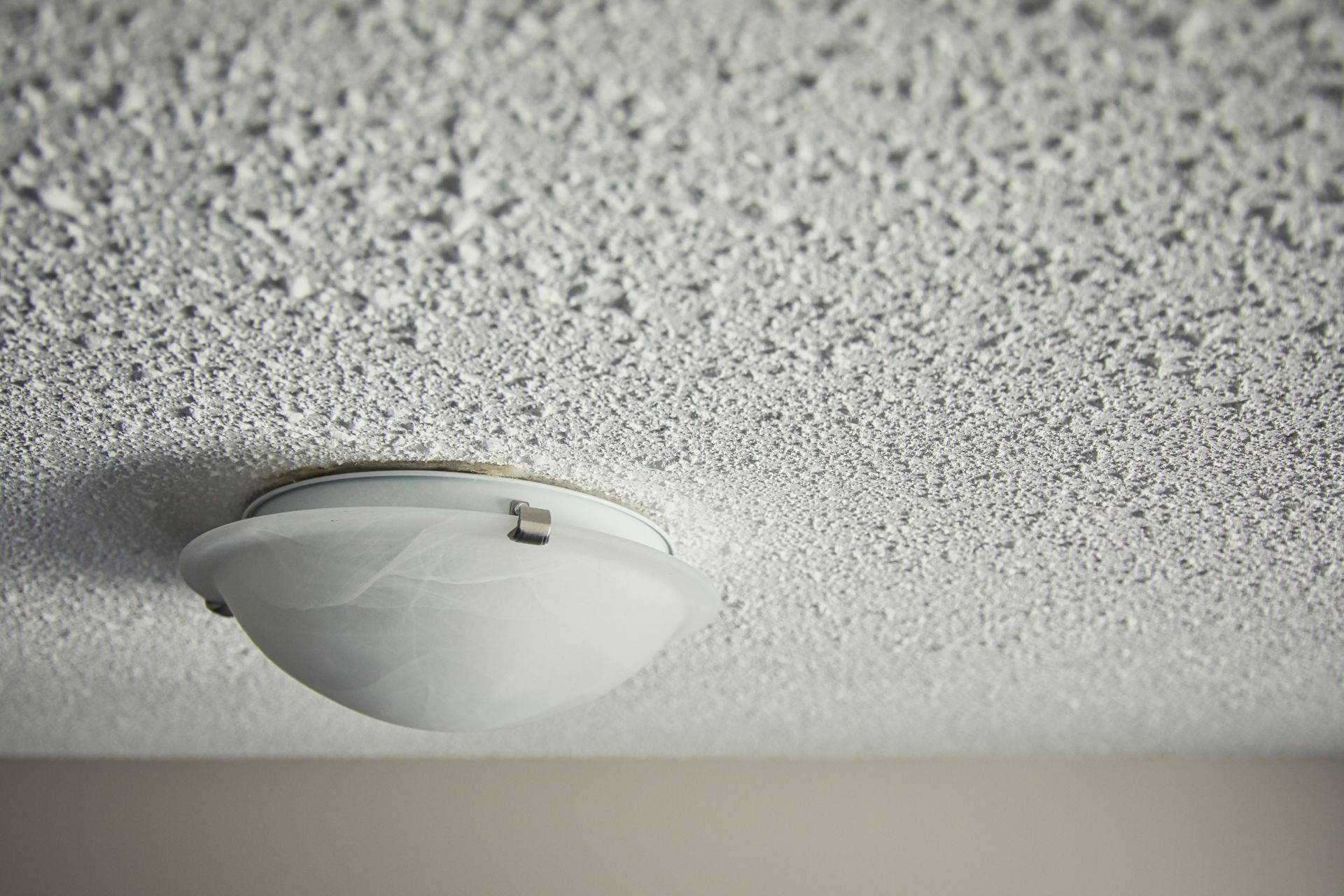
Homes built across Charleston during the 1980s and 1990s were finished almost universally with sprayed acoustic texture—a method that was fast, cheap, and standard for the era. That texture is now the most visible sign of a home's age, and when it carries water stains or discoloration from decades of humidity trapped in the plaster layer beneath, no amount of repainting closes the gap. M & J Drywall & Construction removes that texture and refinishes ceilings to a Level 5 Skim Coat standard, delivering a surface that holds paint evenly and reflects light without showing seams or roller marks.
The process begins by wetting the popcorn texture to loosen its bond with the substrate—dry scraping tears paper face from drywall and creates an uneven base that no finish coat can correct. Once the ceiling is scraped clean, crews sand away residue, then apply a full Level 5 Skim Coat, which fills surface irregularities left by scraping and produces a genuinely flat plane rather than a masked one. The ceiling is then primed and painted as part of the same project scope, so the finished result requires no follow-up trades or return visits.
Arrange an on-site evaluation with M & J Drywall & Construction to assess your ceiling condition and confirm the finishing scope before work begins.
What a Level 5 Finish Actually Involves
Level 5 is a drywall finishing designation that refers to a skim coat applied over the entire surface—not just taped joints and fastener heads. It matters here because scraping popcorn texture leaves microscopic ridges, torn paper, and shallow gouges that will telegraph through any paint sheen above flat. Applying a skim coat over the full ceiling plane fills those irregularities uniformly so that eggshell or satin paint lays down without revealing the scraping pattern underneath. Four-person crews handle removal and finishing as standard scope, which means the sequencing—wet, scrape, sand, skim, prime, paint—is completed without handoffs that introduce scheduling gaps or inconsistency between stages.
Once the finish coat is applied and dry, you will notice that the ceiling reads as a continuous flat surface rather than a collection of patched areas. Paint adhesion improves measurably on a primed Level 5 surface compared to texture, and ambient light from windows and fixtures distributes more evenly without the shadow pattern that acoustic bumps create. Older homes in areas like Mount Pleasant, where 1980s and 1990s construction is concentrated in established subdivisions, show a pronounced visual difference once the flat finish is complete.
All preparation, materials, debris removal, and the final paint coat are included in the project price, so there are no separate line items for disposal or priming. What is not included is any pre-existing damage remediation to the substrate beyond what standard scraping and skimming address—if water intrusion has caused structural damage to the drywall panel itself, that is assessed and scoped separately before finishing begins.
Questions About How the Work Is Done
The following questions address the removal and refinishing process specifically, including what to expect on-site and what the finished ceiling will look like.
What does wetting the ceiling before scraping actually accomplish?
Wetting softens the adhesive bond between the texture and the drywall paper face so the scraper lifts the material cleanly rather than tearing the substrate beneath it, which would require additional repairs before any skim coat could be applied.
Why is sanding required after scraping and before applying the skim coat?
Scraping leaves a residue layer of dried texture compound and raised paper fibers that prevent the skim coat from bonding flat; sanding removes that residue and gives the skim coat a consistent surface to adhere to.
How does a Level 5 Skim Coat differ from a standard drywall finish?
A standard Level 3 or 4 finish only addresses joints and fasteners, while a Level 5 applies a thin skim coat across the entire ceiling plane—a distinction that becomes visible whenever paint with any sheen is applied under direct or raking light.
What should you check in a finished ceiling to confirm the skim work was done correctly?
Stand near a window and look across the ceiling at a low angle—a properly finished Level 5 surface shows no ridging, scrape marks, or joint lines, and the paint lays uniformly without variation in sheen or texture across the span.
How does the age of the drywall in Charleston-area homes affect the removal process?
In homes built before the mid-1990s, the paper face on drywall panels is more susceptible to tearing when texture is removed dry, which is why the wet-scrape method is standard on older stock—it preserves the face paper and reduces the number of spot repairs needed before skimming.
M & J Drywall & Construction also performs popcorn ceiling removal in Goose Creek, Summerville, Moncks Corner, Beaufort, and Mount Pleasant. To move forward, request a detailed walkthrough of your ceiling scope so materials and crew staging can be confirmed before the project start date.