
Deck Surfaces Stained Before Deterioration Sets In
Deck staining in Charleston for wooden decks on residential properties where surface preparation determines how long the stain holds
A wooden deck that goes unstained long enough does not simply look faded—the wood itself begins to gray, check, and open grain structure that makes it progressively harder to achieve clean penetration when stain is finally applied. M & J Drywall & Construction stains decks for residential properties in Charleston as part of the exterior work portfolio, coordinating deck staining with other exterior jobs so the surface is cleaned, prepped, and coated in a single site visit rather than managed as a separate project. Custom homes with large deck structures on Isle of Palms and Sullivan's Island, where wood faces prolonged UV exposure and salt air, represent exactly the kind of property where staining on a regular cycle matters more than waiting until visible damage prompts it.
The process begins with surface cleaning to remove contamination—algae, mildew residue, gray oxidation, and previous stain that has lifted or peeled—before any new stain is applied. Applying stain over a contaminated or sealed surface produces an uneven finish that sits on top of the wood rather than penetrating into it, which shortens the effective life of the coating significantly. Once the deck is clean and dry, stain is applied with attention to how the specific wood species and existing surface condition absorb the product, since a pressure-treated pine deck from a recent build absorbs differently than aged ipe or cedar on an older custom home.
Ask about coordinating deck staining with scheduled exterior painting work so both can be completed during the same crew visit.
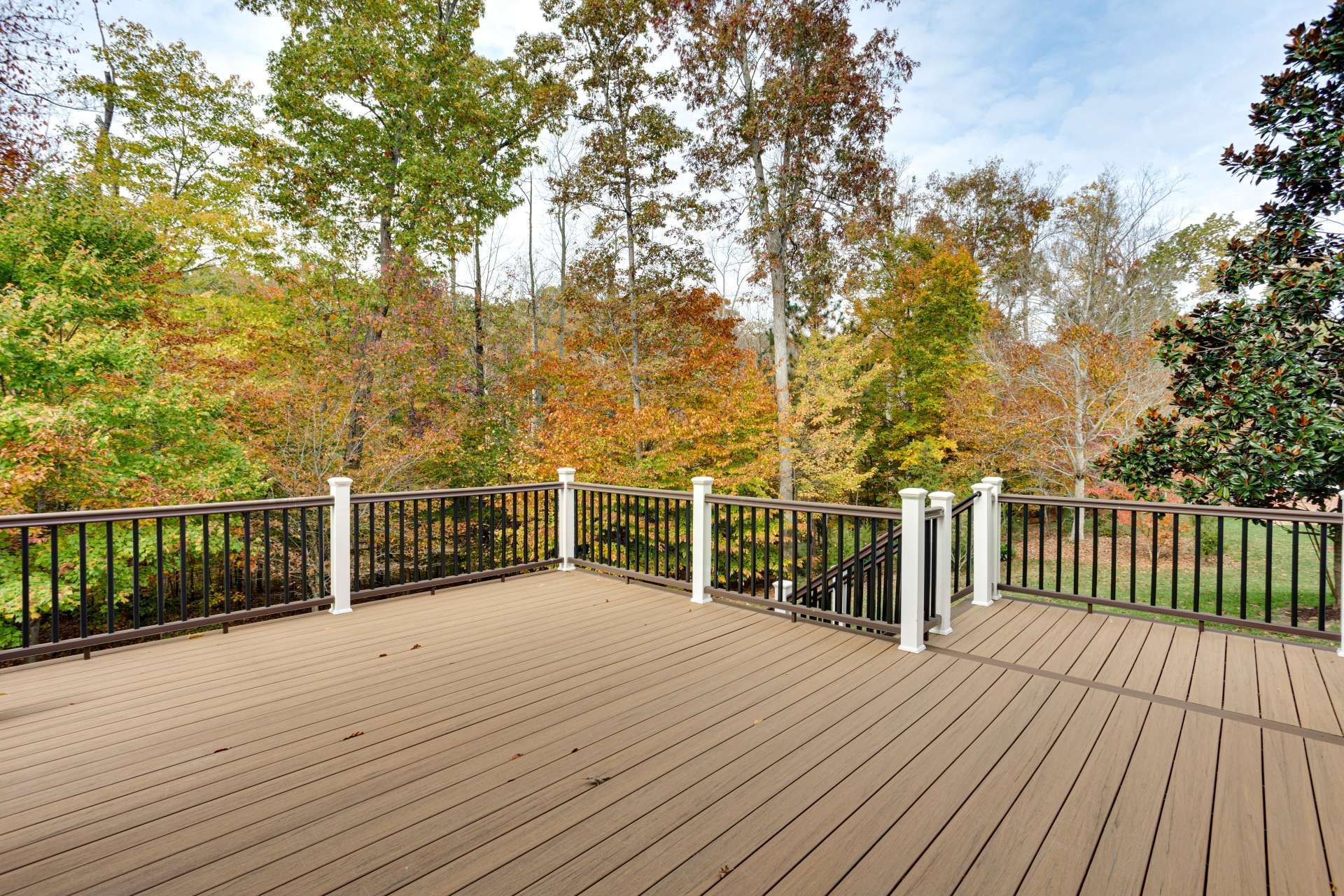
What Proper Deck Staining Actually Prevents Over Time
Deck staining functions as a surface barrier against two primary deterioration mechanisms: UV degradation, which breaks down lignin in wood fibers and causes the gray, fibrous surface texture familiar on neglected decks, and moisture cycling, where wood expands and contracts as it absorbs and releases water. Checking—the surface cracks that run along the grain—develops when that cycling happens repeatedly in unprotected wood. A penetrating stain reduces both mechanisms by providing UV blockers that slow lignin breakdown and a water-repellent component that reduces how much moisture the wood absorbs per cycle. The stain does not stop deterioration entirely, but it extends the window before the wood surface needs mechanical repair or replacement significantly.
After staining is complete, the deck surface should show even color saturation across all boards, with no blotchy areas where stain pooled in low spots or skipped over raised grain. End grain on deck boards—the most absorbent section of any board—should be saturated rather than dry, because unprotected end grain is where moisture enters most readily and where checking typically starts. When M & J Drywall & Construction completes a deck staining job, the deck is returned to use once the stain has cured, with no tacky or wet areas remaining on the walking surface.
Deck staining is offered as part of the exterior work portfolio and is most effectively scheduled when other exterior work—house painting, trim painting—is already planned for the property. This approach allows the four-person crew to stage equipment and materials for both the deck and the exterior surfaces in a single mobilization rather than requiring two separate setup events. The type of stain used—solid, semi-transparent, or clear—is selected based on the current condition of the wood, with more deteriorated surfaces typically requiring a solid or semi-solid product to provide adequate coverage over existing gray or checked wood.
What Property Owners Ask About Deck Staining Work
These questions address how deck staining is prepared and executed, what affects how long a stain holds, and how to evaluate whether the work has been done correctly.
Why does surface cleaning matter before stain is applied, and what does it remove?
Cleaning removes algae, mildew, gray oxidation, and old stain residue that would prevent new stain from penetrating the wood surface. Stain applied over contaminated or previously sealed wood sits on the surface rather than absorbing into the grain, which shortens its effective life and produces an uneven finish.
How does the choice between solid, semi-transparent, and clear stain affect the finished result?
Solid stains provide the most coverage and are best suited for wood that has already grayed or checked, because they mask surface condition rather than revealing it. Semi-transparent products work well on wood in sound condition where the grain character is worth preserving. Clear or tone products are appropriate only on new or recently refinished wood with no existing surface damage.
What does correctly applied stain look like on the finished deck surface?
Even color saturation across all boards, fully saturated end grain, no pooling in low spots or skipped areas over raised grain, and a consistent sheen level are all indicators of a properly applied coat. Blotchy or streaked coverage typically indicates the surface was not adequately cleaned and opened before staining.
How does the age and wood species of a deck affect how stain is applied?
Older decks and those built with denser species like ipe or cedar absorb stain differently than newer pressure-treated pine. Dense hardwoods may require light sanding or a wood brightener after cleaning to open the grain enough for adequate penetration, while pressure-treated pine in its first few years may need a longer drying period after cleaning before stain will absorb evenly.
How is deck staining coordinated with exterior painting when both are part of the same project?
The crew typically handles deck prep and first-coat staining while exterior paint work is advancing on vertical surfaces, then returns to apply a second stain coat if the product and wood condition require it once the deck surface has absorbed and dried from the first application. Coordinating both within the same site visit reduces total project time and keeps staging efficient.
M & J Drywall & Construction also completes deck staining in Goose Creek, Summerville, Moncks Corner, Beaufort, and Mount Pleasant. To include deck staining in your exterior project scope, note the deck dimensions and current surface condition when arranging your exterior estimate so the crew can assess what prep the surface will need before stain is applied.