
Trim Work That Shows at Close Range
Trim and door painting in Charleston for high-end residential renovations where surface defects are most visible
Trim and door painting is where most interior paint jobs either earn or lose credibility—it's the surface people touch, open, close, and look at directly rather than at a distance. M & J Drywall & Construction includes trim, doors, and door frames as standard scope on every interior and exterior paint job in Charleston, handled with the same prep discipline applied to walls rather than treated as a finish-line task. Custom homes and high-end residential renovations on Kiawah Island and Isle of Palms regularly have extensive millwork, double doors, and detailed door casings that require consistent paint thickness and clean edges on every face.
The prep sequence for trim follows the same logic as wall prep: outlet faceplates and hardware are removed rather than masked, surfaces are protected, and any drywall point-up at trim junctions is addressed before primer goes on. Trim and doors receive two coats—a primer coat followed by a finish coat—applied in the correct sequence relative to wall painting so that cut lines between trim and wall surfaces are sharp rather than feathered. Door frames, the door face, and all surrounding trim receive the same material and the same number of passes to prevent the mismatched sheen and coverage that shows up when trim is treated as an afterthought.
Request an on-site consultation to review the trim scope and confirm prep requirements before scheduling begins.
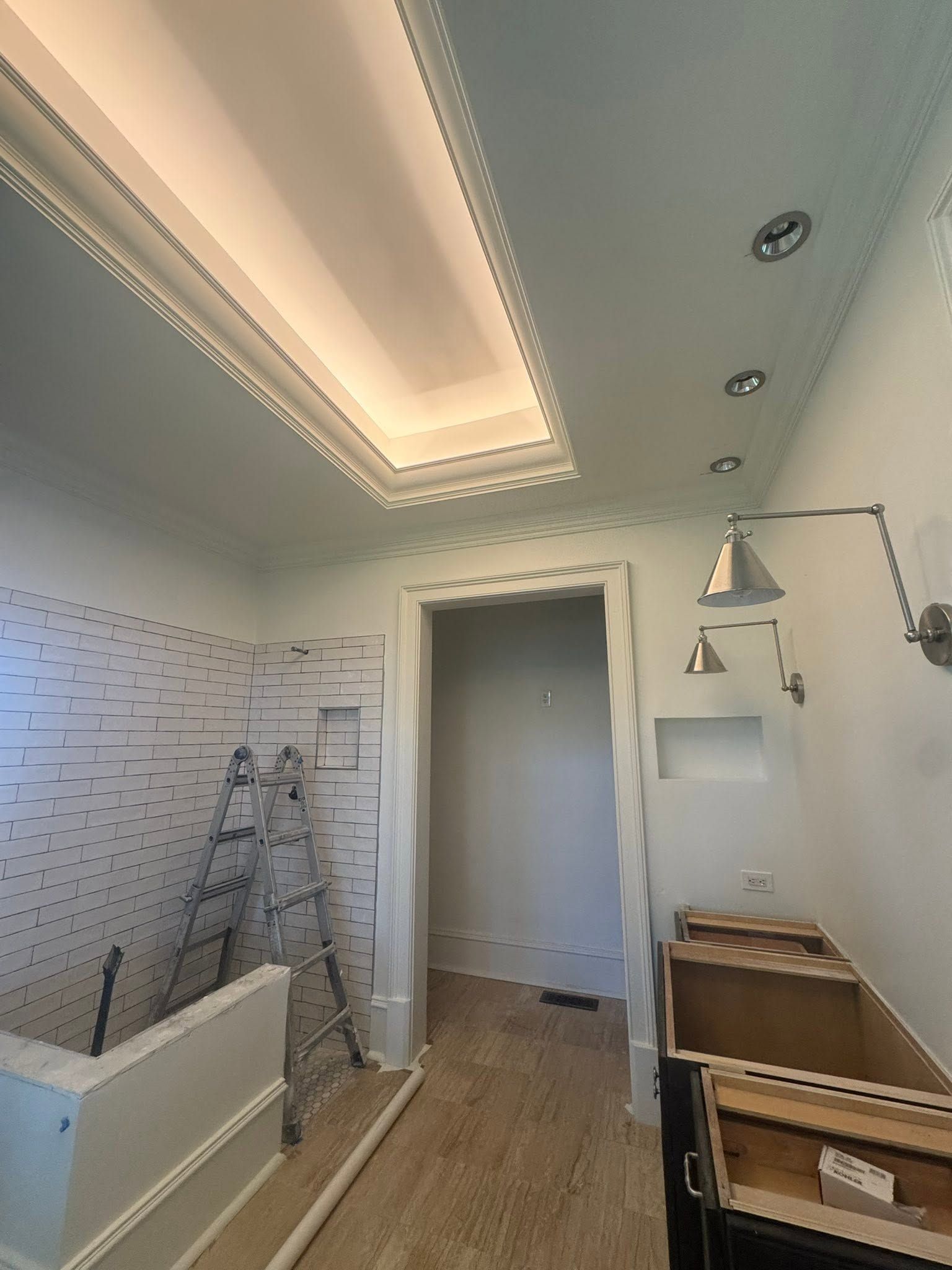
The Difference Between Trim Done Correctly and a Shortcut
The gap between proper trim painting and a shortcut shows up in three places: paint buildup at corners that prevents doors from closing cleanly, feathered cut lines between trim and wall color that require a second look to pass, and inconsistent sheen caused by applying a finish coat over surfaces that weren't primed. M & J Drywall & Construction's crews prime all trim before applying finish coats, which is the step most commonly skipped when a paint crew is rushing to close out a project—and the step whose absence is most visible within the first year as the surface begins to show wear at high-contact points like door edges and frame corners.
Once trim and door work is complete, you'll notice sharp color breaks between wall and trim surfaces, consistent sheen across all door faces without roller stippling or lap lines, and hardware reinstalled cleanly rather than left masked. Doors close with the same clearance they had before painting because the finish coat thickness is controlled rather than built up at frame edges.
Because four-person crews handle the full paint scope in four to five days, trim work is not a separate appointment—it is completed during the same mobilization as wall and ceiling painting, which means you're not managing two separate scheduling windows or two separate inspections to close the project.
Common Questions About This Service
These questions address how trim and door painting is performed and what distinguishes correctly done work from common shortcuts.
What prep steps does trim require before paint is applied?
Hardware and outlet faceplates adjacent to trim are removed before work begins; trim surfaces are sanded lightly to promote adhesion, and any gap between trim and wall is addressed before primer goes on so the finish coat doesn't bridge an unstable edge.
Why do doors sometimes fail to close after painting and how is that prevented?
Paint buildup at frame edges accumulates when coats are applied too thickly or without cutting back at corners; controlling coat thickness and wiping frame edges before the paint sets prevents the clearance loss that causes doors to bind.
How does the crew handle trim painting in Charleston homes with detailed millwork?
Complex profiles—crown molding, detailed door casings, built-up baseboards—are cut in by hand rather than rolled; the crew works in sections so each profile face receives a consistent pass without material pooling in the corners of the profile.
When in the painting sequence does trim work happen relative to wall and ceiling coats?
Ceilings are typically painted first, walls second, and trim last; this order means any overspray or roll splatter from ceiling and wall work lands on surfaces that haven't received their finish coat yet, so trim remains clean at completion without masking every run.
What should you look for in trim work to confirm it was done correctly?
Check door edges for paint buildup that changes the gap when the door is closed, inspect corner joints on door casings for sharp paint lines rather than feathered edges, and run a hand along baseboards to feel whether the surface is smooth or carries roller texture from an unprimed coat.
M & J Drywall & Construction also handles
trim and door painting in Goose Creek, Summerville, Moncks Corner, Beaufort, and Mount Pleasant. To confirm what your trim scope includes and how it fits the overall project sequence, set up a walkthrough before scheduling the crew.